
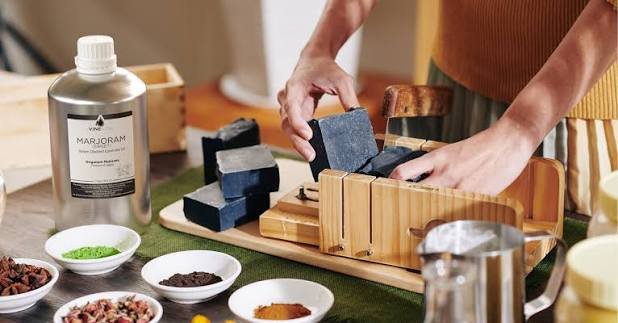

Soap makers can choose from various natural oils and specialty ingredients when purchasing soap making supplies. Their choice should align with the type of soap they are developing, making oil selection one part of the overall formulation process rather than a standalone decision. Here are a few different types of oils for soap making:
Base Oils
Base oils are among the core ingredients in soap making supplies. Coconut, olive, palm, sunflower, castor, and sesame oils each contribute different qualities to a soap formulation, while shea and cocoa butter are used to modify the bar’s texture and conditioning properties. The selected base oils influence how the soap performs during production and after curing.
Soap makers often combine multiple oils to achieve specific properties in the finished bar. Testing small batches helps identify how the selected oils interact and whether the fragrance remains noticeable after curing. Small-scale testing also helps identify issues such as seizing or accelerated trace before producing larger batches.
The production method also affects base oil selection. Cold-process soap combines oils with lye and relies on saponification to form the finished soap. Melt-and-pour soap uses a prepared base that is melted before additives such as colorants and fragrances are incorporated. Oil selection for each method should account for how the ingredients affect the reaction, texture, and handling of the soap.
Carrier and Specialty Botanical Oils
Soap ingredients also include carrier oils, which are typically derived from plants or seeds. Avocado, jojoba, apricot kernel, and almond oils are common options, with each offering different properties for soap formulations. Processing methods and botanical sources also affect the characteristics of these oils, which influence how they fit into different recipes and product types.
Specialty botanical oils provide additional formulation options when a soap maker wants to incorporate a particular plant-derived ingredient. Rosehip, moringa, and hemp seed oils each have distinct properties that affect their role in a formula. The intended use of the finished soap should guide the selection of a specialty oil, along with how the ingredient fits with the other oils and additives in the recipe.
Essential and Fragrance Oils
Soap makers use fragrance oils and essential oils to add scent to finished soap. Although both serve the same purpose, their composition differs. Fragrance oils are formulated scent blends that include aromas not found in nature; essential oils are derived from botanical sources through processes such as expression or distillation.
Essential oils differ from base oils and are not typically used as the primary oil in a soap formula. Soap makers generally use smaller amounts to add botanical fragrance to a recipe. Common options include:
- Peppermint
- Eucalyptus
- Rosemary
- Lavender
- Tea Tree
Fragrance oils offer a wider selection of scent profiles for soap formulations. Soap makers choose from fruity, floral, fresh, sweet, herbal, and earthy fragrances based on the desired character of the finished product. Some fragrance oils are formulated for particular soap-making methods, including melt-and-pour or hot-process soap. The appropriate fragrance depends on the formula, production method, and intended scent.
Getting the Right Soap Making Supplies
The wide selection of oils gives soap makers flexibility when developing different formulations and scent profiles. Base oils form the foundation of many traditional soap recipes; specialty botanical oils provide additional options for adjusting the formula. Fragrance oils broaden the range of available scents, and essential oils add fragrances derived from botanical sources. The properties of each oil affect how it fits into a recipe, so soap makers should evaluate the production method and fragrance profile when selecting ingredients. Start with oils that suit your formulation, then test additional options in small batches to refine the finished soap. Explore soap making supplies to find oils and other ingredients for your formulations.