
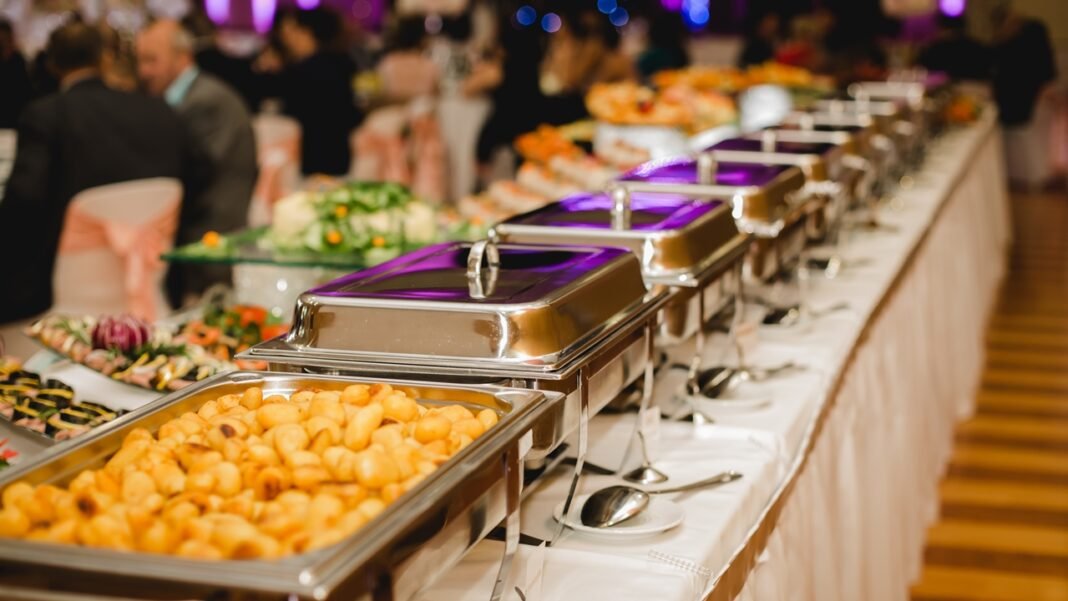

Several practical details can affect how smoothly an event runs; this includes the layout of the dining area, bar, and guest seating. To plan the overall setup effectively, the catering team needs key venue information, such as the available facilities and access times. Vendor schedules and the service area layout also influence guest flow and the efficiency of food service. Here are some ways caterers and venue teams can coordinate to create a cohesive event experience:
Coordinate Venue Logistics
Kitchen access affects how the catering team prepares, stores, and serves food. Before the event, the team should confirm when they’re able to enter the kitchen and what equipment and refrigeration are available. These details help determine what needs to be prepared off-site and what can be completed at the venue. Setup and teardown times should also match the venue’s access schedule. If the catering team has only a short window before guests arrive, they may need to organize serving pieces and food in advance to keep setup on schedule.
Guest seating influences the placement of buffet tables, bars, and other service stations. A buffet positioned too close to dining tables can create congestion, especially when guests are moving through the space at the same time. Placing the buffet along an accessible wall or near the dining area helps create a more efficient flow, and it keeps main walkways clear.
Venue requirements also determine where equipment and service areas can be placed. Keep food preparation and staging areas close enough to service stations for staff to work efficiently, while keeping buffet and bar stations accessible without interfering with activities such as dancing or presentations. By confirming these logistics in advance, the catering and venue teams can create a practical setup that supports food service and keeps the event moving smoothly.
Customize Event Menus
The menu should reflect the event type, guest count, and style of service, whether the occasion requires a formal meal or a more casual setup. A formal dinner sometimes uses plated courses; a casual reception may use buffet service or food stations. Seasonal selections provide dishes that correspond with the time of year and occasion.
Menu planning includes vegan, vegetarian, gluten-free, and dairy-free selections. These selections provide alternatives for guests with different dietary needs. Choices can also vary according to the event’s theme and guest preferences; this helps the cuisine complement the occasion and venue setting. Some of the menu selections include:
- Mediterranean cuisine
- Latin-inspired dishes
- American dishes
- Hawaiian dishes
Integrate Bar Services
The placement of the bar affects how guests move between the dining area, seating, and other event spaces. If the venue has an existing bar, it can serve as the designated beverage service point. A custom bar setup offers a flexible alternative, particularly when the venue does not have a dedicated bar area. The bar location may depend on the event type, venue layout, and beverage arrangement, but it should remain easy for guests to access without disrupting dining or other activities. The event schedule can also be arranged to support beverage service before, during, and after the meal. TIPS-certified bartenders work with venue staff and the food service team to coordinate beverage service throughout the event.
Coordinate Event Partners
Event decor and floral arrangements enhance the overall design and presentation of the event, including the catering areas. Floral arrangements and event decor may affect food service, guest movement, and the placement of tables and service stations. Catering teams should know where these installations will be placed before finalizing the catering setup. By coordinating with florists and decorators, teams can create a layout where the decor complements the food service areas rather than creating obstacles or congestion.
Clear communication keeps catering teams and all other vendors informed. Any changes to the event plan should be communicated to vendors promptly, particularly changes involving setup or venue access. A detailed schedule gives each team specific arrival, setup, service, and cleanup times, helping vendors coordinate their responsibilities throughout the event.
Create a Cohesive Catering Experience
A well-coordinated event involves efficient timing and food service. Food presentation, bar placement, seating arrangements, and vendor schedules all affect the guest experience, and they impact how comfortably guests move through the space. Seek professional event service support to coordinate your catering arrangements with the venue and other event partners.