

Life is full of unpredictable moments. Whether it’s a sudden car repair, an unexpected medical expense, or an unforeseen job loss, financial emergencies can strike at any time. Without a buffer, these surprise costs often force people to rely on high-interest credit cards or personal loans, plunging them into debt.
An emergency fund is a dedicated cash reserve set aside strictly for unplanned expenses. It acts as your financial shock absorber, giving you peace of mind and protecting your long-term wealth. Here is a practical, step-by-step guide to building an emergency fund from scratch.
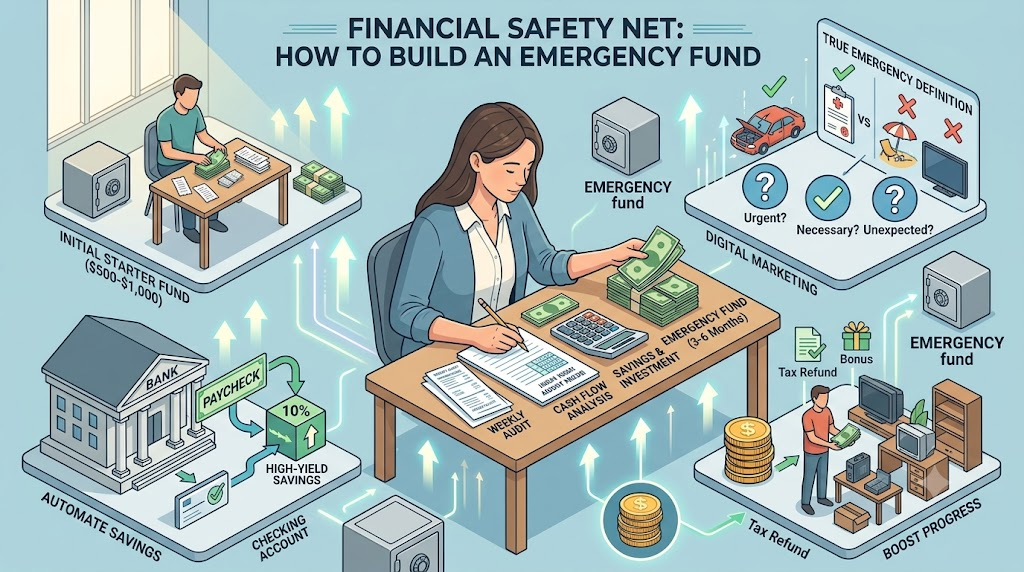
Step 1: Set a Clear Target Goal
Before you start saving, you need to know how much money you actually need.
While financial experts generally recommend saving 3 to 6 months’ worth of essential living expenses, that target can feel overwhelming when starting out. Break it down into two phases:
- Initial Goal (Starter Fund): Aim for a quick win by saving $500 to $1,000. This covers small emergencies like a minor household repair or a dental visit.
- Fully-Funded Goal: Calculate your mandatory monthly expenses—rent/mortgage, utilities, food, insurance, and debt minimums—and multiply that number by 3 to 6.
Note: If you have irregular income or are the sole earner in your household, target the higher end of the range (6 months or more).
Step 2: Choose the Right Account
Where you keep your emergency fund matters just as much as how much you save. The ideal account needs to be two things: liquid (easily accessible) and safe (low risk).
| Account Type | Accessibility | Interest Rate | Suitability |
| High-Yield Savings Account (HYSA) | High (1–2 business days) | High | Best Choice |
| Standard Checking Account | Immediate | Very Low / Zero | Poor (Too easy to spend) |
| Certificates of Deposit (CDs) | Low (Lock-in period) | Moderate / High | Fair (Only for long-term reserves) |
| Stock Market / Crypto | Moderate | High Risk | Avoid (Value can drop during a crisis) |
A High-Yield Savings Account (HYSA) is usually the best option because it yields significantly higher interest than a traditional bank account while keeping your money liquid and safe.
Step 3: Audit Your Monthly Cash Flow
To find money for your emergency fund, examine your current spending. Review your bank statements from the past month and categorize your spending:
- Identify Non-Essentials: Look for minor leaks in your budget—unused subscription services, daily takeaway coffee, or frequent dining out.
- Temporarily Redirect Funds: You don’t have to live frugally forever. Temporarily trim your discretionary spending for a few months and direct those savings straight into your emergency fund.
Step 4: Automate Your Savings
The secret to consistent saving is eliminating the decision-making process. If you wait to save whatever is left over at the end of the month, chances are there won’t be much left.
- Set Up Direct Deposits: Ask your employer if you can split your paycheck so a fixed amount (e.g., $50 or $100) automatically goes directly into your emergency savings account on payday.
- Recurring Bank Transfers: Set up an automated monthly transfer from your checking account to your savings account right after you get paid.
By paying yourself first, your emergency savings grows automatically in the background.
Step 5: Boost Progress with Unexpected Cash
Accelerate your journey by funneling extra or non-standard income straight into your reserve fund:
- Tax Refunds: Allocate all or part of your annual tax refund to your savings.
- Work Bonuses / Overtime: Treat workplace bonuses as savings opportunities rather than extra spending cash.
- Sell Unused Items: Declutter your home and sell old electronics, furniture, or clothes online.
Step 6: Define What Constitutes a True “Emergency”
Once your fund starts growing, protect it from non-emergency spending. Ask yourself these three questions before withdrawing a single dollar:
- Is it unexpected? (e.g., a broken appliance vs. annual car registration)
- Is it necessary? (e.g., an urgent medical bill vs. a discounted vacation package)
- Is it urgent? (e.g., repairing your primary vehicle vs. buying a new phone)
If the expense doesn’t meet all three criteria, leave your emergency fund untouched and pay for it through your regular monthly budget.
Conclusion
Building an emergency fund is a marathon, not a sprint. Don’t worry if you can only save $20 or $50 a week initially—the key is creating the habit and staying consistent. Over time, those small deposits will compound into a strong financial cushion, allowing you to face life’s unexpected turns with confidence instead of stress.